Whether seeking to limit contributions to landfills, help the food-insecure members of our communities or simply streamline your budget, there are multiple viable reasons to want to reduce food waste at meetings and events. But what does that look like in action, and how might it impact planning and the overall event experience?
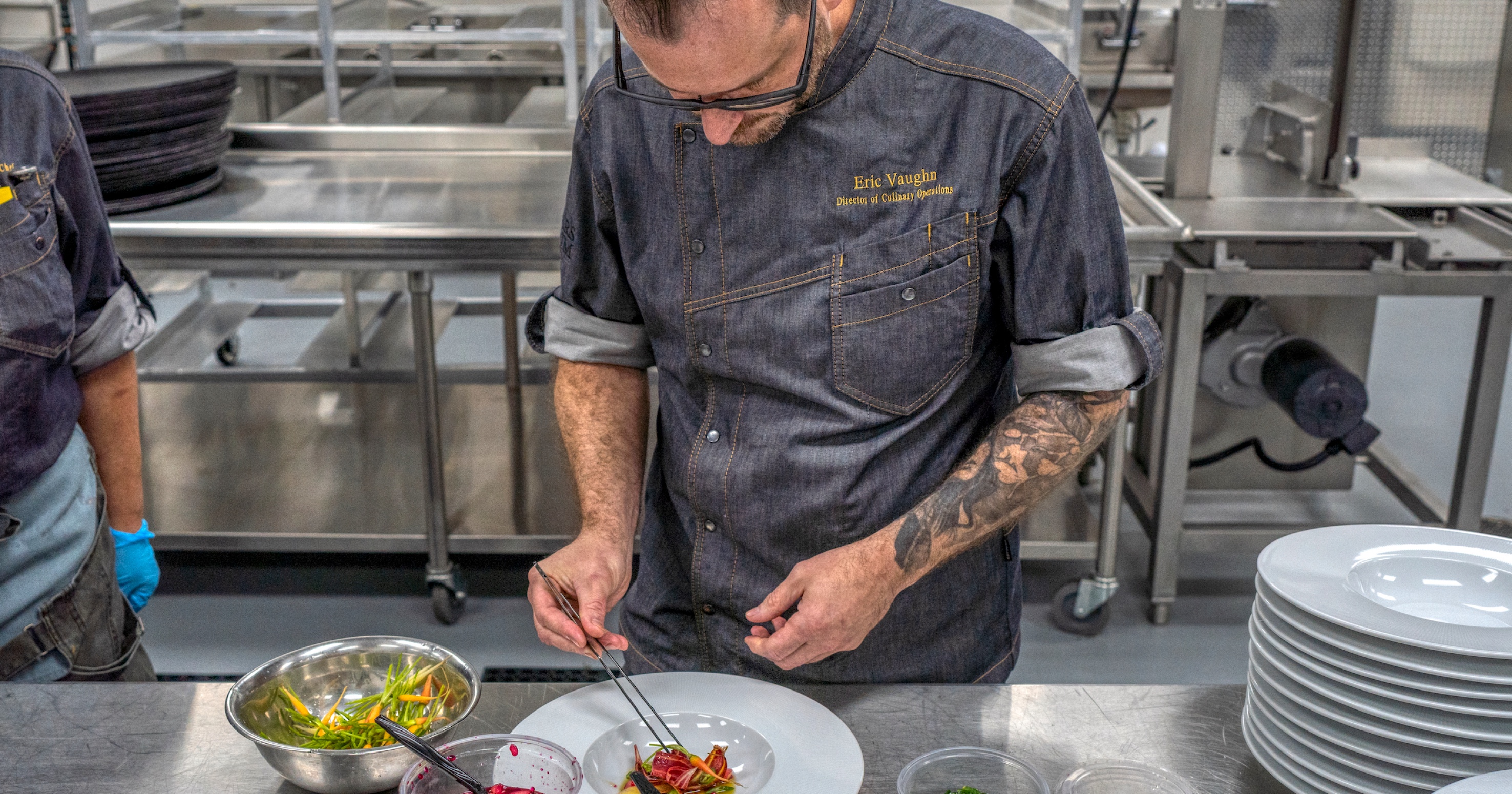
“The biggest challenge of food waste in the large meeting business is forecasting,” says Chef Eric Vaughn, executive director of culinary operations, Las Vegas Region Banquets at Caesars Entertainment. “When we are contracted to feed a certain number of attendees, both the client and us as operators have the goal of ensuring that everyone can be nourished with quality food and beverage in the amount each person believes is best for them. While a great deal of calculating and thoughtful planning go into this, at the end of the day these are just educated guesses and if the turnout is not what is expected, this can lead to a great deal of waste.”
Robbert Weddepohl (MPI Netherlands Chapter), group venue director at Stage Entertainment, sees similar challenges, while evoking a word with which we’ve all become too familiar in the past year.
“One of the biggest barriers is uncertainty,” Weddepohl explains. “Meeting professionals often do not know exactly how many attendees will show up, how hungry they will be or what they will actually consume. That uncertainty frequently leads to overproduction to avoid shortages, which directly results in food waste.”
For some groups and events, Weddepohl says this challenge can be overcome by adopting more flexible, demand-driven food prep procedures. He believes the most impactful strategy involves preparing food as close to the moment of consumption as possible and in quantities that can be adjusted, as needed, throughout the event—always with an eye on limiting waste.
“Onsite, instant preparation allows caterers to scale production up or down based on actual demand instead of forecasts alone,” he says. “Preparing food as fresh as possible on site and based on real-time demand requires strong mise en place and relatively simple, modular recipes,” he says. “This approach significantly reduces waste and, at the same time, creates opportunities for show cooking and live preparation. That not only limits overproduction but also enhances the guest experience.”
More reliable forecasting
Despite being confident in their ability to forecast consumption, there are myriad factors that impact overproduction of food at events that are simply beyond the control of meeting professionals.
For both Vaughn and Weddepohl, accurate forecasting starts with data.
“Tracking consumption is the best tool,” Vaughn says. “We keep records of groups’ consumption habits—this really helps with returning clients. With new clients we try to understand what type of group they are and use information on groups that have a similar demographic to help refine our purchasing and preparation decisions.”
Improved forecasting needs better and more thorough data before and after the event, according to Weddepohl.
“Pre-event registration data is essential,” he says. “Knowing dietary preferences is helpful, but it is equally important to understand whether attendees plan to stay for lunch, dinner and networking drinks. That information has a direct impact on food planning accuracy. And post-event data from waste management systems is just as valuable. By analyzing which items are consistently wasted, planners can refine menus, portioning and service formats over time. Combining historical waste data with registration and attendance data results in a much more reliable forecasting model.”
The benefits of leftovers
Even with rock-solid data informing consumption forecasts, there’s bound to be leftover food—but that, too, can be addressed in a positive way.
“The most impactful process with food waste might not be in the reduction of it up front,” Vaughn says. “The most impact, I believe, is on the back end of the event—we can utilize leftovers donate to organizations that are focused on feeding the food insecure.”
Regardless of where your event takes place, chances are there are people who would welcome the quality food leftover. According to the Purdue University College of Agriculture’s Center for Food Demand Analysis & Sustainability, the rate of food insecurity in the U.S. increased in 2025, hitting 16% in November.
“Food waste can also be managed in a more circular way,” Weddepohl says. “Leftover food can sometimes be repurposed for animal feed or other recycling streams, further improving the sustainability profile of an event.”
And all of this can be done in ways that can only positively impact the overall event experience. Vaughn says these food-waste reduction efforts are largely unnoticeable.
“Honestly, I believe that this is the goal,” he says. “If attendees notice it, great, but I believe that we want an experience and presentation that is as good or better than the normal one while including those practices.”
When sustainable F&B practices are communicated in a positive and engaging way, presented as a thoughtful choice rather than a limitation, Weddepohl says the overall event experience can be enhanced.
“Freshly prepared dishes, show cooking concepts and a clear story around responsible use of resources create both awareness and enjoyment,” he says. “Guests feel involved and informed without sacrificing quality or comfort. When done well, sustainable F&B practices lead to higher satisfaction, better food quality, less waste and a strong sustainability narrative that reflects positively on the event and its organizers.”