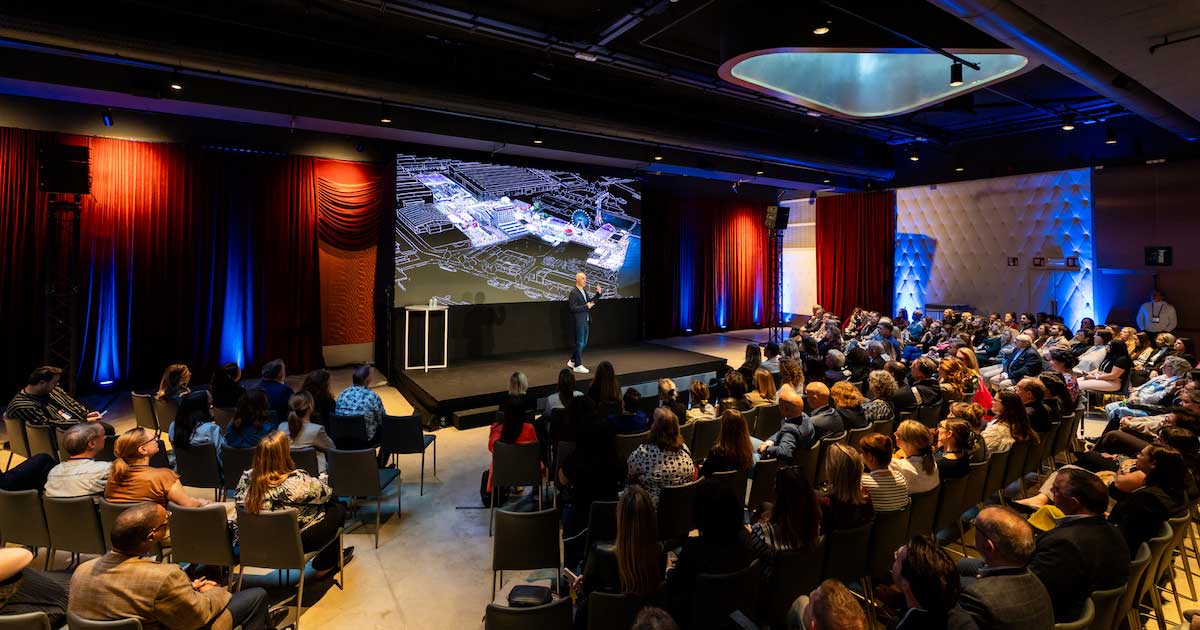
Before the opening plenary speaker at MPI’s European Meetings & Events Conference (EMEC)—22-24 February in Barcelona—MPI President and CEO Paul Van Deventer got proceedings off to a very strong start when he talked about some 2025 successes. He told us first about community growth rising by 13%, the launch of MPI Consulting and the securing of some major partnerships. But he saved a particularly golden nugget for last when he mentioned that in 2025, the member satisfaction rate had risen to 90%.
It was great news for everyone involved. He reminded people that in an ever-changing geopolitical environment, it’s more important than ever for us to bring people together. He added that the ethos of MPI could be seen in the way people greet each other through hugs, handshakes or high fives. Van Deventer encouraged people to be bold and connect deeply. And with his announcement that MPI is doing more with AI, it was the perfect segue to introduce the keynote speaker.
Xander Kranenburg, co-founder of Narrative, took to the stage and gave something of a shock to delegates when he announced that he isn’t an AI expert. There were a few gasps from some attendees, but it was soon obvious that whilst Kranenburg may not describe himself as such, he is someone who clearly understands AI and how people can play, learn and have fun with it.
After 25 years of producing events that shape how people think, feel and connect, Kranenburg now helps teams use AI to expand what they can do, rather than replace them.
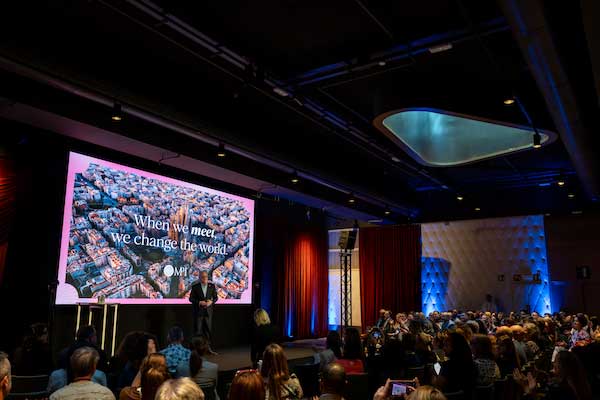
AI is already here. But many people still treat it like a guest instead of a helpful colleague. Some may have played with a few prompts, written a few captions, but then stopped. His talk explored what’s next.
Kranenburg encouraged people to embrace the things that don’t always work out. In doing so, we learn more and grow faster. In his words, messy is good, especially when it means developing our curiosity muscles.
In essence, he had three key points that he wanted the attendees to think more deeply about when working with AI.
First, the skill of prompting, or in other words, the skill of asking questions. The better the questions are the better will be the responses that follow. And this is where it’s easy to become unstuck. Trying to find the right words to use. In fact, if you obsess over this too much, you’re likely to become lost. Not least because there is no silver bullet when it comes to asking questions.
It’s time to play, ask your questions and then, when you’re happy, ask a question of the language model, which is, “Make this question better.”
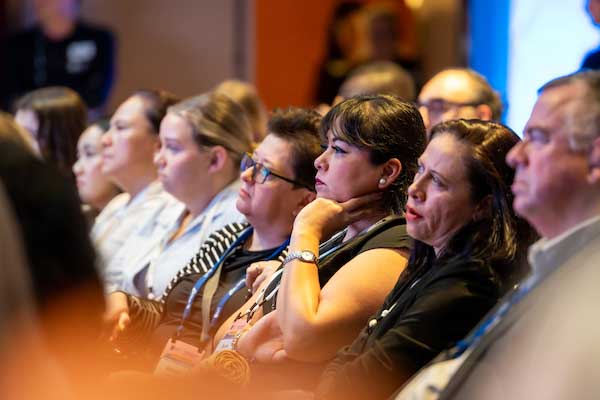
Secondly, he encouraged attendees to provide context for your AI assistant. Without context it becomes harder for the AI to give good responses. He provided the example of hiring someone to do a task as a new hire, but not telling them about the organisation, its culture, branding and more. In real-life situations that just wouldn’t happen. So, the AI needs to be treated the same way. He encouraged people to give as much context as possible, such as PDFs, videos and presentations, all of which can be invaluable.
And thirdly, he reminded people about the importance of taste. From the first prompt, AI will deliver something that is perfectly fine but completely forgettable. The problem comes when you continue to iterate way beyond what’s needed and you end up with too much to choose from. At some point you need to stop. In his words, the art is knowing when to stop.
As meeting professionals, we must remember taste. It’s our job to know what’s likely to engage, inspire and educate. AI is our tool and it’s powerful in the hands of the curious. But the true instrument at work here is not artificial intelligence, it’s you.
Photos courtesy Jan Buteijn, Butino.